+90 (544) 637 49 04
 bilgi@kecedünyasi.com



How to Plan Colored Felt Stock in the Summer Period?
Summer months are one of the periods when colored felt stocks are rearranged for hobby workshops, school preparation institutions, organization companies and small manufacturers. During the holiday season, children's events increase, wedding and birthday organizations intensify, and e-commerce sellers begin to prepare for their autumn collections. Therefore, correct stock planning in July directly affects the production rate in the second half of the year.
The first step when buying colored felt is to evaluate past sales and usage data. Which colors were sold out the most, which thicknesses were used more, which projects resulted in wastage, and which products were reordered? These questions show the real need of the workshop. For example, while pastel tones stand out in a business that produces door decorations, vibrant colors such as red, green, yellow and blue may run out faster in event companies.
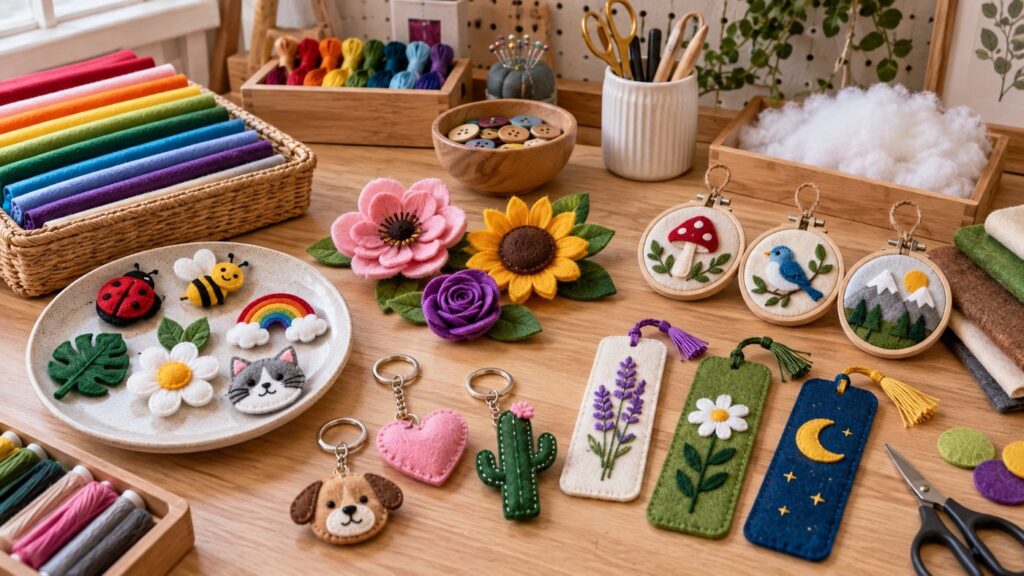
Keeping base colors in stock ensures production security. Shades of white, black, grey, red, blue, green, pink and yellow are reused in many projects. Seasonal support colors can be added to these main colors. During summer and school preparation periods, turquoise, lilac, light green, mustard, orange and cream tones increase product diversity. Felt World's wide color chart makes it easy to meet both standard and special color needs in a single supply process.
Thickness planning is as important as color selection. 1 mm thin colored felt provides efficient results in figure, letter and detail work. 2 mm and 3 mm felts provide a fuller appearance on door ornaments, magnets, panels and decorative products. Thicknesses of 4 mm and above are preferred for bags, organizers and products that require a solid stance. Instead of purchasing unnecessary amounts of each thickness in the stock plan, the actual usage rate should be calculated according to the product group.
The share of wastage should not be forgotten when purchasing wholesale colored felt. In laser cutting, die cutting or hand cutting jobs, part placement may not always be fully efficient. Leaving a margin of wastage between 5 and 10 percent, especially for specially shaped figures, reduces the risk of interrupting production. Workshops that carry out mass production should plan the required amount at once as much as possible to avoid tone differences in different batches of the same color.
Storage conditions of stocks also protect product quality. Colored felt should be stored flat, away from moisture and in an area out of direct sunlight. Roll products should not be wrapped too tightly, and sheet products should be prevented from being crushed by heavy materials. Regular labeling ensures rapid attainment of the correct color and thickness during production.
Conscious stock planning in July is the most practical way to start the fall and school season strong. With the right product support from Felt World, workshops can respond quickly to small orders and maintain color, thickness and delivery standards in high volume production.
At the purchasing stage, not only the color of the product, but also the thickness and surface quality suitable for its intended use should be considered. Checking samples, testing the material by cutting and gluing, and calculating the required amount in advance reduces wastage. Felt World helps users make more conscious choices in procurement processes throughout Turkey with product options for different needs such as colored felt, thick felt, hobby felt and acoustic felt panels.
In addition, for businesses that make regular production, the supply schedule is at least as important as product selection. Stock continuity, fast shipping and correct packaging increase order satisfaction in requests from cities such as Istanbul, Ankara, Izmir, Bursa, Antalya, Konya and Gaziantep. Users who plan their colored felt needs from the beginning can maintain the same quality during seasonal peaks and give their customers a clearer delivery time.
Therefore, material preparation in July secures not only today's orders, but also the intense production flow at the end of summer and back to school.